


Printed literature for the following topics can be requested or obtained by downloading from our Protocols page which is organized more by product category.
Glycosylated/Sticky Proteins
Hydrophilic (polar) Mechanisms: (organic solvent keeps them in solution for better recovery)
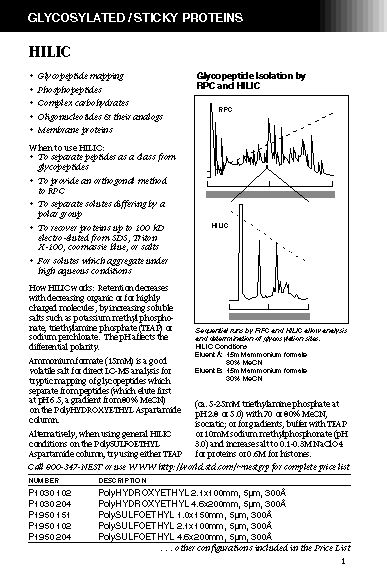
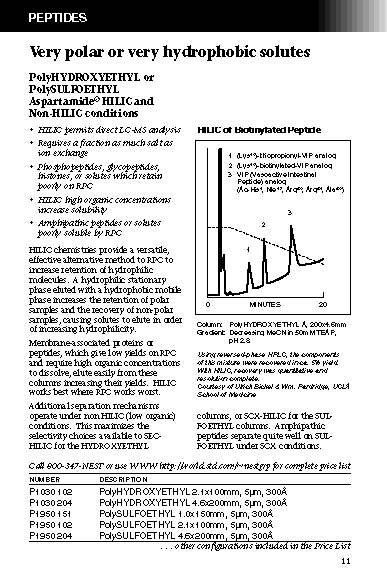
Hydrophilic Interaction Chromatography (HILIC ) for glycopeptide mapping, phosphopeptide isolation, complex carbohydrate analysis, oligonucleotide isolationVery Polar or Very Hydrophobic Solutes - PolyHYDROXYETHYL or PolySULFOETHYL Aspartamide used under HILIC or non HILIC conditions. HILIC permits direct LC-MS analysis in volatile salts. Requires a fraction as much salt as ion exchange when salts are used. Phosphopeptides, glycopeptides, histones, or solutes which retain poorly on RPC or which require high organic concentrations for solubility in RPC chromatograph beautifully with HILIC's high organic conditions. Great for detergent removal or for looking at the polar differences in your molecules.
HILIC LC/MS of Amino Acids from blood to monitor tissue rejection or from plant extracts (pdf)
HILIC detergent or salt removal for MS sample prep (pdf)
HILIC_example of glycopeptide mapping , in volatile buffers for direct LC/MS (pdf)
HILIC of Glucosinolates (pdf)
HILIC-CEX phosphorylation variants of Histone H1.1 (pdf)
HILIC of polar molecules (pdf)
HILIC Separations general information and references (pdf)
Comparison of PolyHYDROXYETHYL A® to Amide-80® for small molecule HILIC LC-MS analysis of fermentation broth.
HILIC, even on raw silica, Increases LC-MS Sensitivity. LCGC article: " Hydrophilic Interaction Chromatography Using Silica Columns for the Retention of Polar Analytes [small molecules sic] and Enhanced ESI-MS Sensitivity"
UltraMicroSpin HILIC general methods for micro sample detergent removal for LC-MS samples (pdf)
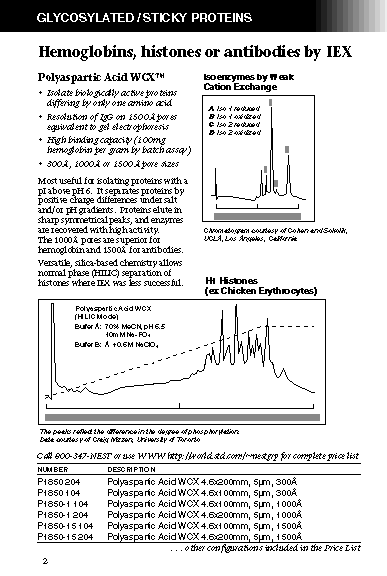
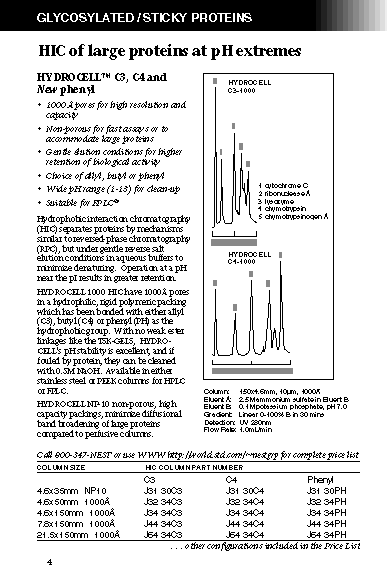
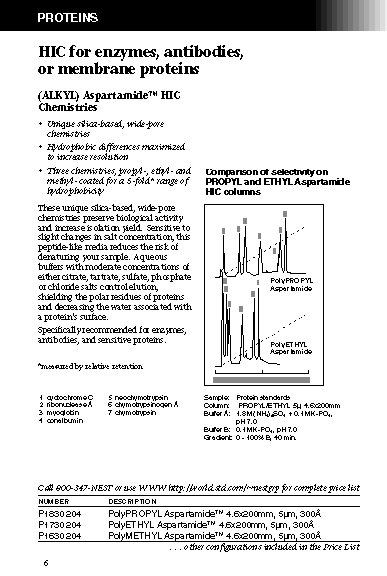
Ion Exchange Mechanisms and Care:Hemoglobins, Histones, or antibodies by IEX on PolyCAT A™ (polyaspartic acid WCX surface chemistry), for isolation of biologically active proteins differing by only one amino acid. Resolution of IgG on 1000Å pores rivals gel electrophoresis. High binding capacity (100mg hemoglobin per gram by batch assay), with 300Å and 1000Å pore sizes available in a wide variety of column sizes from 0.3mmID to 50mmID.Hydrophobic Mechanisms:HIC of large proteins at pH extremes HYDROCELL™ C3, C4 and Phenyl HIC 1000Å pores for high resolution and capacity or Non porous for fast assays or crude samples. Gentle elution conditions for higher retention of biological activity, choice of allyl (C3) butyl (C4) or phenyl, with a wide pH range (1-13) for easy clean-up. Suitable for FPLC®.(ALKYL) Aspartamide™ HIC Chemistries Peptidic bonded phase on silica support for hydrophobic interaction (HIC) of enzymes, antibodies, or weak RPC of membrane proteins. Unique silica based, wide pore family of chemistries with hydrophobic differences maximized to increase resolution. Three chemistries, propyl-, ethyl- and methyl- for a 5 fold range of hydrophobicity
Proteins
Size Exclusion:
Combinatorial library screening of drug-protein conjugates by SEC is fast with a rapid SEC analysis coupled to a RP LC-MS assay. Protein requirements can be reduced 100x by using a 2.1mmID column in this 20 second assay. (pdf)SEC Separations on HYDROXYETHYL Aspartamide columns (pdf)
Ion Exchange Mechanisms and Care:Strong Cation Exchange (SCX) precolumn fractionation coupled directly to RPC-MS-MS simplifies complex protein digest characterization for increased productivity. Whether Multidimensional Chromatographic Analysis of Proteins (MUDCAP), Signature Peptides, the DALPC method (Direct Analysis of Large Protein Complexes), ICAT™ (isotope-coded affinity tagged) labeled, or specific amino acid containing peptides are desired from digested proteins for proteomic characterization, this SCX column in tandem with a capillary RPC column allows true 2-D chromatographic fractionation of 1,500-2000 peptides per run at 5 orders of magnitude better detectability than 2-D gel electrophoresis.Using decreasing pH gradients in volatile buffers for weak cation exchange of proteins for direct LC-MS analysis. (pdf)
Monoclonal antibody analysis by weak cation exchange (WCX) (pdf)
Protein Variant analysis of HgH by WCX illustrates the ability of the PolyCAT A chemistry to separate deamidation and dehydration products in proteins. (pdf)
Effect of organic solvent on WCX of proteins illustrates the value of reducing the hydrophobic mechanism in ion exchange (pdf)
Strong cation exchange (SCX) of Peptides General Protocol (pdf)
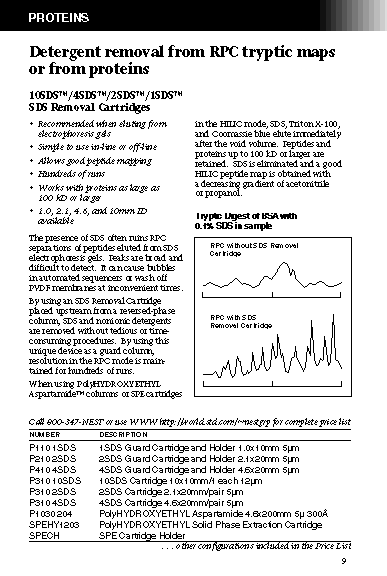
Detergent removal from RPC tryptic maps or from proteins using these SDS Removal guard cartridges coupled to RPC columns in 1.0, 2.1, 4.6, or 10 mmID formats is easy. Recommended when mapping proteins eluted from SDS electrophoresis gels to get reproducible tryptic maps. Allows hundreds of runs. Alternatively, the HILIC technique (see references above) works by removing dyes and detergent prior to elution of peptides followed by glycopeptides in increasing polarity and with proteins as large as 100kD. For off line sample prep, use HILIC micro-SPE tips for detergent or salt removal for LC-MS samples (pdf)
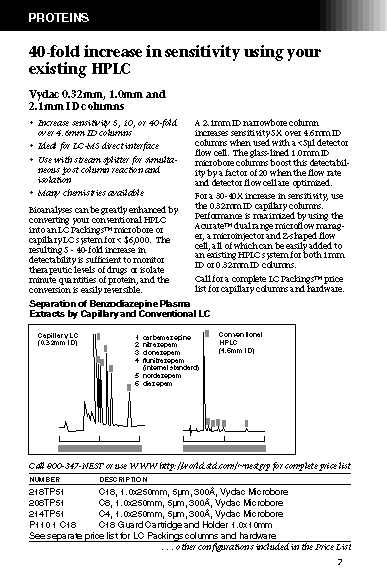
Hyrophobic Mechanisms:(ALKYL) Aspartamide™ HIC Chemistries Peptidic bonded phase on silica support for hydrophobic interaction (HIC) of enzymes, antibodies, or weak RPC of membrane proteins. Unique silica based, wide pore family of chemistries with hydrophobic differences maximized to increase resolution. Three chemistries, propyl-, ethyl- and methyl- for a 5 fold range of hydrophobicity40 fold increase in HPLC detector sensitivity Vydac™ 0.32mm, 1.0mm (glass lined) and 2.1mm ID reverse phase (RPC) columns increase sensitivity 40-, 10-, or 5 fold, respectively, over 4.6mm ID columns. Ideal for LC-MS direct interface especially the Low TFA Vydac MS columns. Use with stream splitter for simultaneous post column reaction and isolation. Many other chemistries are available including the HAISIL™Targa® (low organic, wettable RPC) & Clipeus™ (WOW! selectivity) C8, C18, CN and Phenyl phases for peptide separations without TFA for better LC-MS detection.
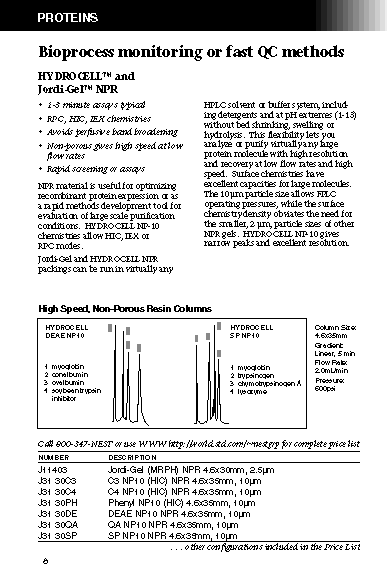
Bioprocess monitoring or fast QC methods on Non porous packings 1-3 minute assays typical with RPC, HIC, or IEX Sepax-Technologies® NPR chemistries. Avoid perfusive band broadening and non porous packings give high speed (short assays) at low flow rates, making them ideal for rapid screening or QC assays
Small Molecules & Peptides
Size Exclusion:
Small molecule SEC, Adjustable SEC PolyHYDROXYETHYL Aspartamide™ SEC 60Å columns are excellent for the resolution of small peptides or small solutes <600 MW, for desalting of tetra-peptides for MS or sequencing, or for the analysis of residual monomer content of a polymer like polyacrylamide. SEC can be done in a volatile mobile phase. For routine SEC of enzymes or other proteins, adjustable SEC allows one column to operate in two different fractionation ranges by selecting the appropriate mobile phase.
Hydrophilic (polar) Mechanisms: (See also HILIC for Proteins above)
Inverse reverse phase using HILIC conditions shifts peaks around to simplify preparative isolation. Phosphopeptides under HILIC conditions have sharper peaks due to the high organic conditions. HILIC is ideal for solutes which elute too quickly by RPC.Hyrophobic Mechanisms:HILIC micro-SPE tips for detergent or salt removal for LC-MS sample prep (pdf)
HILIC LC/MS of Amino Acids from blood to monitor tissue rejection or from plant extracts (pdf)
HILIC of Glucosinolates (pdf)
HILIC Glycopeptides (pdf)
HILIC small molecule applications (pdf)Very Polar or Very Hydrophobic Solutes - PolyHYDROXYETHYL or PolySULFOETHYL Aspartamide used under HILIC or non HILIC conditions. HILIC permits direct LC-MS analysis in volatile salts. Requires a fraction as much salt as ion exchange when salts are used. Phosphopeptides, glycopeptides, histones, or solutes which retain poorly on RPC or which require high organic concentrations for solubility in RPC chromatograph beautifully with HILIC's high organic conditions. Great for detergent removal or for looking at the polar differences in your molecules.
Newly expanded team of "workhorse" RPC chemistries from Higgins Analytical™ beyond their C4, C8, C18, and diphenyl HAISIL™ phases for small molecules now includes capabilities for peptides and quantitative proteomics. Available in C4 or C18 micro-SPE cartridges or tubes. Use a C4 for proteins or "sticky" peptides, a C18 for peptides <20 amino acids or the Diphenyl for peptides with aromatic amino acids. Direct scale-up to larger diameters or lower cost larger particles without changing the gradient slope or organic concentration for elution.Both the HAISIL™ TARGA® (low organic, wettable RPC), which is excellent for DABSYL or AccQ-Tag® derviatized amino acids, and quantitative proteomics, or the CLIPEUS™ (WOW! selectivity) in C8, C18, CN or Phenyl phases do not require base deactivation to chromatograph small polar amines without tailing. Both chemistries are great for no TFA peptide separations, and they are now available in 10µm or 20µm particle preparative columns. Loading is 25% to 50% greater than on Vydac 218TP materials.
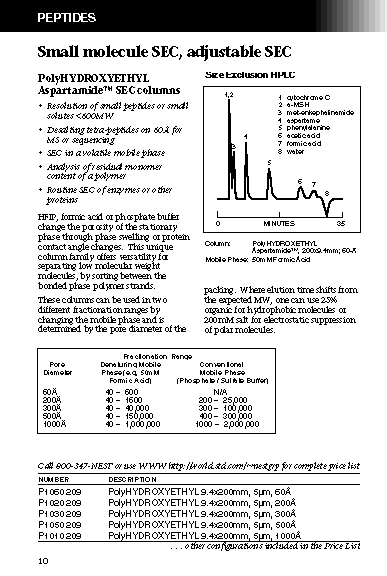

Mobile Phase modifier effects on bonded phase selectivity illustrate the differences in small molecule analysis chemistries. The high surface area, 120Å pore chemistry, for high capacity is ideal for very small molecules (< 10 amino acids or pharmaceuticals). A 3µm rapid analysis column can cut analysis times in half.Ion Exchange Mechanisms:10µm TARGA ® & PROTO300™ in 1" columns, or 20µm packings in 2" and 4" diameter columns offer high mass, high efficiency biopolymer isolation capability to save time, labor and minimize loss of resolution during scale-up. Better efficiency than cartridge columns.
Synthetic peptide orthogonal methods to RPC - PolySULFOETHYL Aspartamide SCX retains peptides by as little as a single positive charge to recover your target molecule from mixtures. Separates by hydrophobicity and positive charge simultaneously and works well with either sulfate or chloride salts. Amazing 40mg capacity on an analytical column makes this a practical first step for synthetic peptide recovery.Whether Multidimensional Chromatographic Analysis of Proteins (MUDCAP), Signature Peptides, the DALPC method (Direct Analysis of Large Protein Complexes), ICAT™ (isotope-coded affinity tagged) labeled, or specific amino acid containing peptides are desired from digested proteins for proteomic characterization, this SCX column in tandem with a capillary RPC column allows true 2-D chromatographic fractionation of 1,500-2000 peptides per run at 5 orders of magnitude better detectability than 2-D gel electrophoresis.
Inverse reverse phase using HILIC conditions shifts peaks around to simplify preparative isolation. Phosphopeptides under HILIC conditions have sharper peaks due to the high organic conditions. HILIC is ideal for solutes which elute too quickly by RPC.

Oligonucleotides
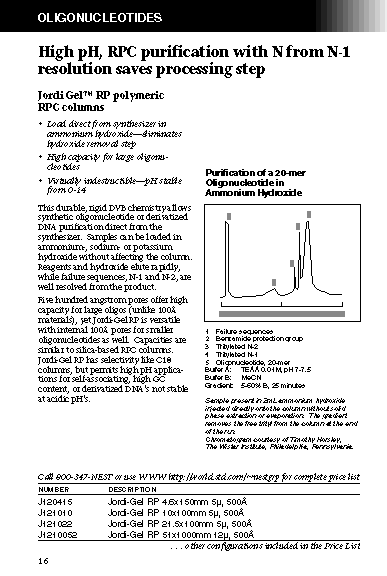
Higgins TARGA C18, a water wettable RPC for poorly retained polar analytes like DNA or RNA Nucleotides, allows starting in 100% water and injecting samples in 100% water.Jordi-Gel™ RP polymeric RPC columns. High pH, RPC purification with N from N-1 resolution saves processing steps in oligonucleotide separations. The RP-C18 phase is excellent for separating by alkyl differences molecules soluble at alkaline pH.
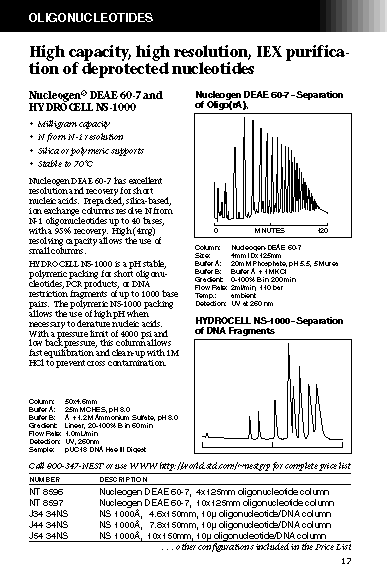
Nucleogen® DEAE 60-7 and HYDROCELL NS-1000 High Capacity, high resolution, IEX N from N-1 purification of deprotected nucleotides. Milligram capacity, silica or polymeric supports are stable to 70C.
Protein Electrophoresis
Cozap for Coomassie Blue removal from protein gels provides consistency to desatining, without the mess of tissues or the spilling of contaminated liquid, since destain solution need not be changed as frequently. You will get crystal clear gels each time.
Directions:
Place COZAP in the tank with your destaining solution. COZAP will absorb Coomassie Blue, leaving only the protein bands.
Once the gel is destained, take the gel out of the tank.
COZAP can remain in the destaining tank until the next use.
COZAP can be used for several gels, until it turns a deep blue color.Why is COZAP better than tissues or foam:
Crystal Clear Gels
No Second Wash Required
Clear Solution for Band Viewing
Recovers Destaining Solution
Destains 5-10 Mini-Gels Each
Faster, Cheaper and Cleaner
No Charcoal or Dye Residues
Molecular Biology
Exclu-Sieve Agarose for the most difficult of DNA or RNA applications, this low EEO, long stranded, high tensile strength agarose out performs the rest at an extra ordinarily low cost! (pdf)
Legal Stuff
Copyright and Patent Information

The Nest Group, Inc.™ Closed USA Sales Operations
Please e-mail to webmaster.
| Home | IdeaBook | Quotes | Price/Applic | Price/Vendor | Protocols|