

Training
- Basics of Dialysis and Ion Exchange
Brief Overview of Polypeptide Purification Techniques
Designing a purification protocol using ion exchange resins
"Buffer Solubility in Aqueous-Organic Solvents" Adam P. Schellinger and Peter W. Carr, LCGC, JUNE (2004) 22(6): 544-48. Useful for RPC and/or HILIC mobile phase composition selection.
Buffers for LCMS or ELSD systems.
Buffer Preparation Calculator (by Professor Robert J Beynon).
- Choose the buffer species you want to use. Enter parameters for volume, pH, and concentration of buffer species, with an option to modify the ionic strength by addition of neutral salt. Finally, enter the temperature at which you'll use the buffer, and the temperature at which you'll make it up. All in all and excellent tool you'll find useful.
Detergents & Buffers for HIC or IEX separations.
Effect of excessive loading volume on SPE Tips or Trap Columns: Use of 100% water with TARGA C18 increases retention of polar molecules for quantitative experiments.
Eliminate tailing due to metals chelating sample on frits or MS emitter tips with a 50mM disodium EDTA treatment (an off-line, non-volatile treatment), or more conveniently, with acetylacetonate in the mobile phase.
The Importance of Contact Time for Either Desalting or Trapping of Polar Solutes on Trap Columns.
The Importance of Detector Response Time when using Superficially Porous Packings: If not fast enough, at low concentrations, narrow peaks appear to give non-linear responses.
Improving LC–MS Sensitivity S. Lupo, LCGC North America, Volume 36, 652–660, (2018).
An Introduction to HILIC Chromatography, A Tutorial and Applications Manual: "A Practical Guide to HILIC"
An Introduction to Ion Chromatography and trouble shooting manual: "A Practical Guide to Ion Chromatography"
Measuring pH in aqueous/organic mixtures [(H-0): Bosch et al., Anal. Chem. 68 (1996) 3651-3657]:
-
Use of the s(w)pH scale method. [(H-00): Canals I, JA Portal, E Bosch, and M Roses
Retention of ionizable compounds on HPLC. 4. Mobile-phase pH measurement in methanol/water
Anal Chem, April 15, 2000; 72(8): 1802-9.]
- Three
procedures are evaluated:
- - measurement of the pH of the aqueous HPLC buffer before mixing it with
the organic modifier,
- measurement of the pH of the HPLC buffer after mixing it with the organic modifier using a pH electrode system calibrated with aqueous buffers, and
- measurement of the pH of the HPLC buffer after mixing it with the organic modifier but calibrating the electrode system with reference buffers prepared in the same mixed solvent used as mobile phase.
-
"Mobile-Phase Buffers, Part I: The Interpretation of pH in Partially Aqueous Mobile Phases." G. William Tindall, LCGC 2002 20 (11), 1028-1032. A pH change occurs when organic solvent is present and how silica columns can be used at a higher pH.
"Mobile-Phase Buffers, Part II Buffer Selection and Capacity." G. William Tindall, LCGC 2002 20 (12), 1114-1118. Selecting buffers for use in partially aqueous mobile phases.
"Mobile-Phase Buffers, Part III Preparation of Buffers." G. William Tindall, LCGC 2003 21 (1), 28-32. The importance of using the weights-and-volumes format.
Molarity of Concentrated Reagents
- Table of Dilutions to make 1 Molar Solutions of Acids & Bases for LC-MS or Ion Exchange
Relative Strength of Salts on Retention in HILIC Separations. A.J. Alpert, "Effect of salts on retention in hydrophilic interaction chromatography", J. Chromatogr. A, 1538 (2018) 45–53.
Retention Time Predictor Tool for ZIC-HILIC columns.
Scale-up Tables for Sample Loading and Gradient Modification for Column Dimension Changes.
Size Exclusion: A theoretical basis for SEC. Barth, H.G. and Saunders, G.D., "Fundamentals and Properties of Size-Exclusion Chromatography Packings and Columns", Supplement to LCGC, Recent Developments in LC Column Technology, April 2012, 46-53.
Solid Phase Extraction: Six-Step Method Development (adapted, with thanks to Prof. Michael Burke, Univ. AZ) for robust results.
Volatile Buffers for LCMS or ELSD systems.
Volume Dependency of Retention with Partition Columns:
- Effect of excessive loading volume on SPE Tips or Trap Columns: Use of 100% water with TARGA C18 increases retention of polar molecules for quantitative experiments.
HPLC Column Care
-
HIC for Proteins:
(ALKYL) Aspartamide™ Hydrophobic Intereaction Technical Sheet (Mfg. Instruction Sheet)
Buffer Tables for HIC and IEX.
HILIC for Polar Differences in Molecules:
PolyHYDROXYETHYL™ Aspartamide Technical Sheet (Mfg. Instruction Sheet)
PolyGLYCOPLEX™ (for Complex Carbohydrates) Technical Sheet (Mfg. Instruction Sheet)
HILICON® iHILIC® FUSION & iHILIC®-(P) Classic General Instructions:
-
iHILIC® FUSION & FUSION(+) HPLC and UHPLC Columns Technical Sheet
iHILIC® FUSION(P) Polymeric Column Technical Sheet
iHILIC®-(P) Classic an in stock, alternative to ZIC® pHILIC for Metabolomics
iHILIC® FUSION(P) & (P) Classic Functional Group Comparison
iSPE® FUSION SPE Cartridges Technical Sheet
ZIC®-HILIC & ZIC®-pHILIC General Operational Parameters Before Getting Started:
-
ZIC®-HILIC Analytical Columns Technical Sheet
ZIC®-cHILIC Columns Technical Sheet
ZIC®-pHILIC Polymeric Columns Technical Sheet
ZIC®-HILIC Capillary Columns Technical Sheet
An Introduction to HILIC Chromatography, A Tutorial and Applications Manual: "A Practical Guide to HILIC"
Ion Exchange:
PolySULFOETHYL™ Aspartamide Strong Cation Exchange Technical Sheet (Mfg. Instruction Sheet)
PolyCAT A™ Weak Cation Exchange Technical Sheet (Mfg. Instruction Sheet)
PolyWAX LP™ Weak Anion Exchange, Technical Sheet (Mfg. Instruction Sheet)
PolyWAX LP™ - ERLIC, Technical Sheet (Mfg. Instruction Sheet)
PolySAX LP™ Strong Anion Exchange, Technical Sheet (Mfg. Instruction Sheet)
PolySAX LP™ - ERLIC, Technical Sheet (Mfg. Instruction Sheet)
PolyCAT A - PolyWAX LP, Mixed-Bed Ion Exchange Technical Sheet (Mfg. Instruction Sheet)
Buffer Tables for IEX and HIC.
Nano-flow LC-MS Capillary Care:
How to Increase Capillary Life with Higgins Caπllary™ columns.
How to Polish Capillary Ends to reduce nano-flow chromatographic system dead volume in tubing connections
Reversed Phase:
General Column Care Information
Higgins Caπllary™ LC-MS capillary column Care & Maintenance
Higgins & Vydac Column Care & Maintenance
Changes to the Vydac All-Guard™ Cartridge System, "...GD54/N", by Hichrom Limited
Size Exclusion (SEC):
SEC Column PolyHYDROXYETHYL Aspartamide Technical Sheet (Mfg. Instruction Sheet)
SEC-RPC Combinatorial Library Screening:
10nM Protein-Conjugate
Screening on narrowbore columns.
BioPureSPN™ SEC Affinity Ligand Screening or Desalting SPE columns & plates
SPE Column Operating Instructions:
Small Molecule SPE Separations
TLC to Flash: Optimizing Your TLCTLC to Flash: Estimation of Load
TLC to Flash: Flash Solvent Selction
TLC to Flash: Gradient Techniques
MiniSpin and MicroTip micro-SPE & Desalting Kits:
- MiniSpin
columns and 96-Well
Spin Plates for microliter sample prep. Concentrate, desalt
or fractionate 2 - 400µl of chemical or biological materials
on over 20 RPC, IEX, and Polar micro-SPE chemistries or 2 - 150µl on SEC materials.
- Ultra MicroTip Part Numbers and Prices
- MiniSpin & 96-Well Spin Part Numbers and Prices
Operating Instructions for MiniSpin ERLIC, HILIC, RPC, SCX, SEC, WAX, or WCX products.
BioPureSPN™ MicroSPE Products and Prices.
Empty µ-Reactors™ with caps to remove solid reactants from micro quantities of samples. See: Xia B., et al. Anal Biochem. 2009 Apr 15;387(2):162-70. Epub 2009 Feb 10. Glycan reductive isotope labeling (GRIL) for quantitative glycomics.
Removal of phospholipids using HILIC on silica SPE cartridges with acetone as eluent for eliminating matrix effects in the analysis of biological fluids when using RPC LC-MS.
Volume Dependent Results for Retention with Tip Columns for MS µ-SPE:
-
Effect of excessive loading volume on SPE Tips or Trap Columns. Use TARGA C18 to increase retention of polar molecules for quantitative experiments, or change loading solvent composition to increase retention.
- Ultra MicroTip Part Numbers and Prices
Six-Step Method Development for Robust Solid Phase Extraction Results.
Ultra-Micro Spin RP clean-up for salt or HILIC for detergent removal from protein digests. Useful for MS applications, due to higher capacity than ZipTip® C18.
Small Molecule and Combi-Chem HPLC Separations
Higgins Analytical® HPLC columns
(Exceptionally Good Performance, A Wide Range of Configurations.&pren;-
Complete Catalog (9 MB pdf) 0.075 - 50mmID columns.
HAISIL® HPLC Column configurations
- 0.075 - 0.15mmID packed or custom packed LC-MS (Caπllary) Capillaries
0.32 - 0.5mmID microCapillaries (Capellini)
Short, Direct Connect, 2.1mmID Narrowbore (Sprite)
0.3-1.0mmID Guard/Trap (Piccolo)
0.3, 0.5, 0.8, & 1.0mmID (Microbore) s.s. columns
2.1, 3.0, & 4.6mmID (Analytical & Narrowbore) s.s. columns
10mmID & 20mmID (Semi-Prep & Prep) s.s. columns
10mmID & 20mmID (HAISpeed) cartridge columns & guards
-
Fe-Free Columns & Cartridges
(HAICART) 3.2 & 4.6mmID s.s. Cartridges
(HAIPEEK) PEEK/Titanium 2.1mmID Cartridge Columns & 2.1mmID & 3.2mmID Guard Columns
(HAISpeed) 10mmID & 20mmID cartridge columns & guards
(Cartridge Holders) for 2.1, 3.2, 4.6,10, & 20mm I.D. Cartridges
(HAIFILTER) in-line filter holders and replacement filters
- HAISIL 100™ products
HAISIL 300™ products
Kromasil® 100 small pore columns.
- Comparison of Kromasil® to PHALANX™ for pharmaceutical method equivalency.
-
HAISIL RS, PROTO™ 200 C4 & C18 for Peptide applications.
- Comparison of PROTO™ 200 to Grace/Vydac® C18 Peptide Columns.
Comparison of PROTO 200 for Synthetic Peptides.
HAISIL TS, TARGA ® Fast Equilibrating C8 & C18 for Polar Analytes & Proteomics.
HAISIL CS, CLIPEUS™ Silica, CN, Phenyl, C8, & C18 phases, excellent for Small Molecule applications.
-
HAISIL VS, HEAVY™ Ultra-high density coating for wide pH range applications.
HAISIL HL, High Load High density coating for Combi-Chem & Fast LC Analyses.
HAISIL PS, PHALANX™ Water-wettable, Ultra-high density coating for wide pH range applications.
Applications for HAISIL Columns:
- Amino acids on HAISIL Columns:
-
TARGA (low organic, 100% water wettable RPC) for DABSYL or AccQ-Tag® derivatives
High Load for fast PTH analyses by conventional HPLC
PTH columns for an ABI® PTH amino acid sequence analyzer
HAISIL PTC (ABI 711-0204) for PTC analyses
HAISIL 100 for Pico-Tag® derivatives
-
Amines (without tailing), or for LC-MS/MS, "no TFA"
peptide separations: CLIPEUS with WOW! selectivity in C8, C18, CN or Phenyl phases that do not
require base deactivation.
Aromatic Organic Compound analyses without buffer
Combi-Chem analyses of small molecules on Heavily Loaded HAISIL columns
Metabolomics & Proteomics:
Fast equilibrating & 100% aqueous loading TARGA, allows extremely wide polarity range separations of sugars, metabolites & polar peptides, or peptide trapping for LC/MS/MS or trapping.-
Combinatorial Library Screening:
10nM Protein-Conjugate Screening using SEC-RPC on narrowbore columns.
Comparison of TARGA to BetaBasic™ for Polar Peptide Separations
-
Comparison of PROTO™ C18 to Other Columns for Phosphopeptides.
-
Comparison of PROTO300™ C4 to Vydac® C4 for proteins.
Comparison of PROTO™300 C4 to Vydac C8 and Zorbax® C8 for protein digests.
Grace/Vydac® Small Molecule HPLC Columns
-
Vydac Application Notes
Vydac Column Care
Protein & Peptide Analysis Applications:
Antibody Concentration and Desalting
-
ConSep™ Antibody Concentration and Desalting Columns (115µL --> 20µL without membrane concentration nor spinning).
HisSep™ spin column optimized for rapid and gentle removal of histidine from antibody formulation buffers.
mAbSep™ An easy-to-use, high recovery, totally non-denaturing method to buffer exchange, remove salts & small molecules from monoclonal antibodies, antibody drug conjugates (ADC), or high molecular weight protein solutions.
HIC HPLC Analysis Antibody Drug Conjugates
Detergent Removal
Technical Sheet for HILIC microSPE Detergent Removal Cartridges or SDS Removal Guard columns.Peptide Retention Time Calculations
-
Oleg Krokhin's RT Calculator. New sequence-specific
correction factors for prediction of peptide retention in RP-HPLC: application to
protein identification by off-line HPLC-MALDI-MS. This version has been developed for the same set of ~2000
tryptic peptides and features new correction factors related to a peptide's propensity to form helical
structures. Correlation about 0.98 (R-squared value) was obtained for the training set of 2000 peptides
compared to 0.96 for version 2.
Higgins Analytical HILIC and RPC Columns
-
Complete Catalog (7.8 MB pdf) 0.075 - 22mmID columns.
HAISIL® Product Sheets
-
(Caπllary) 0.075 - 0.15mmID LC-MS packed or custom packed columns
(Capellini) 0.32 - 0.5mmID microCapillaries
(Sprite) Short, Direct Connect, 2.1mmID Narrowbore Columns
(Piccolo) 0.3-1.0mmID Microbore Guard/Trap
HILIC HAISIL® 100 Silica Columns
Cartridge Column Products (HAIPEEK)
2.1, 3.0, & 4.6mmID (Analytical & Narrowbore) s.s. columns
10mmID & 20mmID (Semi-Prep & Prep) s.s. columns
10mmID & 20mmID (HAISpeed) cartridge columns & guards
Applications for HAISIL HILIC & Peptide and Protein Columns:
Amino acids on HAISIL Columns:
-
TARGA (low organic, 100% water wettable RPC) for DABSYL or AccQ-Tag® derivatives
High Load for fast PTH analyses
HAISIL PTC (ABI 711-0204) for PTC analyses
HAISIL 100 for Pico-Tag® derivatives
Metabolomics & Proteomics:
Reduce LC-MS Equilibration Time Costs! Fast equilibrating & 100% aqueous loadable TARGA® C18, allows extremely wide polarity range separations of sugars, metabolites or peptides. Packed or custom packed in Caπllary™ 0.075 - 0.15mmID capillaries for LC/MS/MS or trapping.-
Combinatorial Library Screening:
10nM Protein-Conjugate Screening using SEC-RPC on narrowbore 50mmID columns.
∼12K/wk, SEC-RPC 10nM Protein-Conjugate Screening.
SEC-Native MS Protein-Conjugate Affinity Screening.
RNA-ALIS: Methodology for screening soluble RNAs as small molecule targets.
Strategies for the Discovery and Optimization of Small Molecule Ligands for PCSK9 . One hit out of > 200,000 compounds screened was good enough to permit making analogues even more effective for the purpose. Petrilli et al., 2019, Cell Chemical Biology 26, 1–9, December 19, 2019 © 2019 Elsevier Ltd.
SEC Column PolyHYDROXYETHYL Aspartamide Technical Sheet
Comparison of TARGA to BetaBasic™ for Polar Peptides.
Sirt5 deacylase activity: Using short TARGA, Sprite columns to monitor a NAD-Dependent Protein Lysine Demalonylase and Desuccinylase.
PROTO™ 200 C4 & C18, Peptide columns .
-
Comparison of PROTEO 200 to Grace/Vydac® Peptide Columns.
Comparison of PROTO 200 for Synthetic Peptides.
Greater capacity of PROTO 200 C4, 200Å compared to 300Å, C18 for peptide retention.
-
Comparison of PROTO300 C4 for hemoglobin analyses.
Comparison of PROTO300 C4 to Vydac C4 for proteins.
Comparison of PROTO300 C4 to Vydac C8 and Zorbax® C8 for protein digests.
PROTO300 C4 for Polyvalent, Unimolecular Glycopeptide Separations.
TARGA, a water-wettable RPC chemistry , allows 10x faster equilibration using 100% aqueous conditions, whereas other AQ columns need 2-5% ACN. Great for LC-MS/MS "no TFA" proteomic separations of peptides using formic acid as a modifier.
Higgins Columns Part Numbers and Prices
IEX, HIC, RPC & SEC Columns for Proteins & Antibody Drug Conjugates
PolyLC®
- Ion Exchange columns, Operation and Care.
- Mixed-Bed Ion Exchange for Complete Protein Capture and Fractionation
- PolyCAT A™ Weak Cation Exchange Technical Sheet
- PolySULFOETHYL® AspartamideSCX Strong Cation Exchange Spec Sheet
- PolyWAX LP® Weak Anion
Exchange, Spec Sheet
- Dropbox of ERLIC-WAX Publications
-
ERLIC-WAX, Tryptic Phosphopeptide Enrichment (ASMS poster)
-
ERLIC-WAX SPE Phosphopeptide SPE Instructions
-
SDS Removal
- HIC (Hydrophobic Interaction)
-
Interactions between macromolecules and ions: the Hofmeister series Yanjie Zhang and Paul S Cremer, Current Opinion in Chemical Biology, Volume 10, Issue 6, December 2006, Pages 658–663. A discussion of the Specific Ion Effects of various ions regarding the hydration of surfaces by ions and its implications for HIC to retain (precipitate) a mixture of proteins.
Antibody Drug Conjugate HIC Analysis
HIC Methods Development & LC-MS HIC
HIC Operation and Care.
Large Protein HIC-MS Analysis for Top Down Proteomics
MS-compatible, ammonium tartrate salt, for HIC-MS. Comparable to selectivity of ammonium sulfate. The selectivity obtained with it is orthogonal to that of RPC. Xiu L, Valeja SG, Alpert AJ, Jin S, Ge Y., Anal Chem. 2014 Aug 5;86(15):7899-906. doi: 10.1021/ac501836k. Epub 2014 Jul 9.
" Online Hydrophobic Interaction Chromatography-Mass Spectrometry for Top-Down Proteomics." Chen B, Peng Y, Valeja SG, Xiu L, Alpert AJ, Ge Y. Anal Chem. 2016 Feb 2;88(3):1885-91. doi: 10.1021/acs.analchem.5b04285. Epub 2016 Jan 14.
- PolyGLYCOPLEX™ for Complex Carbohydrate Separations, Spec Sheet
- Rapid, Sensitive SEC Combinatorial Library Screening:
∼12K/wk, SEC-RPC 10nM Protein-Conjugate Screening.
SEC-Native MS Protein-Conjugate Affinity Screening.
RNA-ALIS: Methodology for screening soluble RNAs as small molecule targets.
Strategies for the Discovery and Optimization of Small Molecule Ligands for PCSK9 . One hit out of > 200,000 compounds screened was good enough to permit making analogues even more effective for the purpose. Petrilli et al., 2019, Cell Chemical Biology 26, 1–9, December 19, 2019 © 2019 Elsevier Ltd.
SPE columns & plates for SEC Affinity Ligand Screening
SEC HPLC Column PolyHYDROXYETHYL Aspartamide Technical Sheet
Bibliography of PolyLC column references.
PolyLC Part Numbers and Prices
- Decreasing pH Gradients for Weak Cation Exchange of Peptides
Effect of Organic Solvent on WCX of Proteins
Hemoglobin Analyses by WCX. Comparison of 3µm to 5µm columns for FACS & A1c.
Intact Protein Isolation for Proteomics Bulletin 2006
Monoclonal Antibody Variant Analysis Application Sheet
Protein Variant Analysis Application Sheet
- SCX post ICAT™ and DALPC
fractionation of proteins for Proteomics
Use of pH and salt gradients for 2-D Nano-SCX/RPC-LC/MSMS proteomics fractionation of tryptic digests.
HILIC-SCX of Lung Surfactant Proteins from excess lipids.
Go back to menu.
Sepax-Technologies®
IEX, RPC & SEC Columns for Biomolecules & Antibody Drug Conjugates-
Column Portfolio for ADC Characterization, overview.
Antibody Drug Conjugate Analysis using 1000Å RPC, PolyRP™-1000.
Antibody SEC & WCX Analysis Kit: Analyses using Zenix SEC & WCX NP5 columns.
Comparison of Non-Porous to Porous IEX Resins for Intact Proteins
Fast Mab Aggregate Analysis Using Zenix® SEC Columns
Heavy Chain & Light Chain Mab Analysis Using Zenix® SEC-300 Columns
Mab Analyses in the Presence of Tween Detergents Using Sepax SEC Columns
Barth, H.G. and Saunders, G.D., "Fundamentals and Properties of Size-Exclusion Chromatography Packings and Columns", Supplement to LCGC, Recent Developments in LC Column Technology, April 2012, 46-53. A theoretical basis for SEC, which helps explain why Sepax SEC columns are so effective.
Sepax 3µm Zenix SEC Columns for Biomolecules.
Sepax 5µm SRT SEC Columns for Biomolecules.
Sepax SRT-C and Zenix-C (lay-down) SEC Phases Provide a Wider SEC Range of Separation for Hydrophobic Biomolecules.
Vydac®
- Application Notes for Vydac columns
- Vydac Column Care
- Vydac TP (polymeric bonded phase) columns for peptides
- Everest® C18 (monomeric) Ultra High Resolution Protein & Peptide Tryptic Mapping Columns.
- Importance of TFA Concentration for a reproducible peptide separation.
- Mobile Phase modifier effects on bonded phase selectivity and on Low TFA MS bonded silica columns
- Proteomic applications on "low TFA" MS media in prepacked capillary columns from 0.075mmID - 4.6mmID.
- Validation of Reverse Phase HPLC separations (TFA, PO4, HOAc, HCl) Spec. Sheet
-
Comparison of 218TP to PROTO ™ 200 C18 Peptide Columns for 20-30 amino acid peptides.
- Comparison of PROTO300™ C4 to Vydac C4 for proteins.
- Comparison using formic acid to 100Å (LC Packings) column.
Comparison to PROTO™ 200 C18 Peptide Columns for Phosphopeptides.
-
Vydac Part Numbers and Prices
Amino Acid Specific Peptide & Protein Isolation Spin Columns
- BioMolecular Technologies®
Pi3 Methionine
Pi3 Tryptophan
Pi3 Tyrosine Phosphate
Pi3 Part Numbers and Prices
HILIC Methods for Separating Polar Molecules by Polar Differences - Alt.: "Aqueous Normal Phase" (ANP)
- Amino Acids (underivatized) from blood for tissue transplant rejection monitoring
Amino Acids (underivatized) from plant extracts: neutral HILIC column LC-MS/MS
Amino Acids (underivatized) from plant extracts: Ionic HILIC column LC-MS
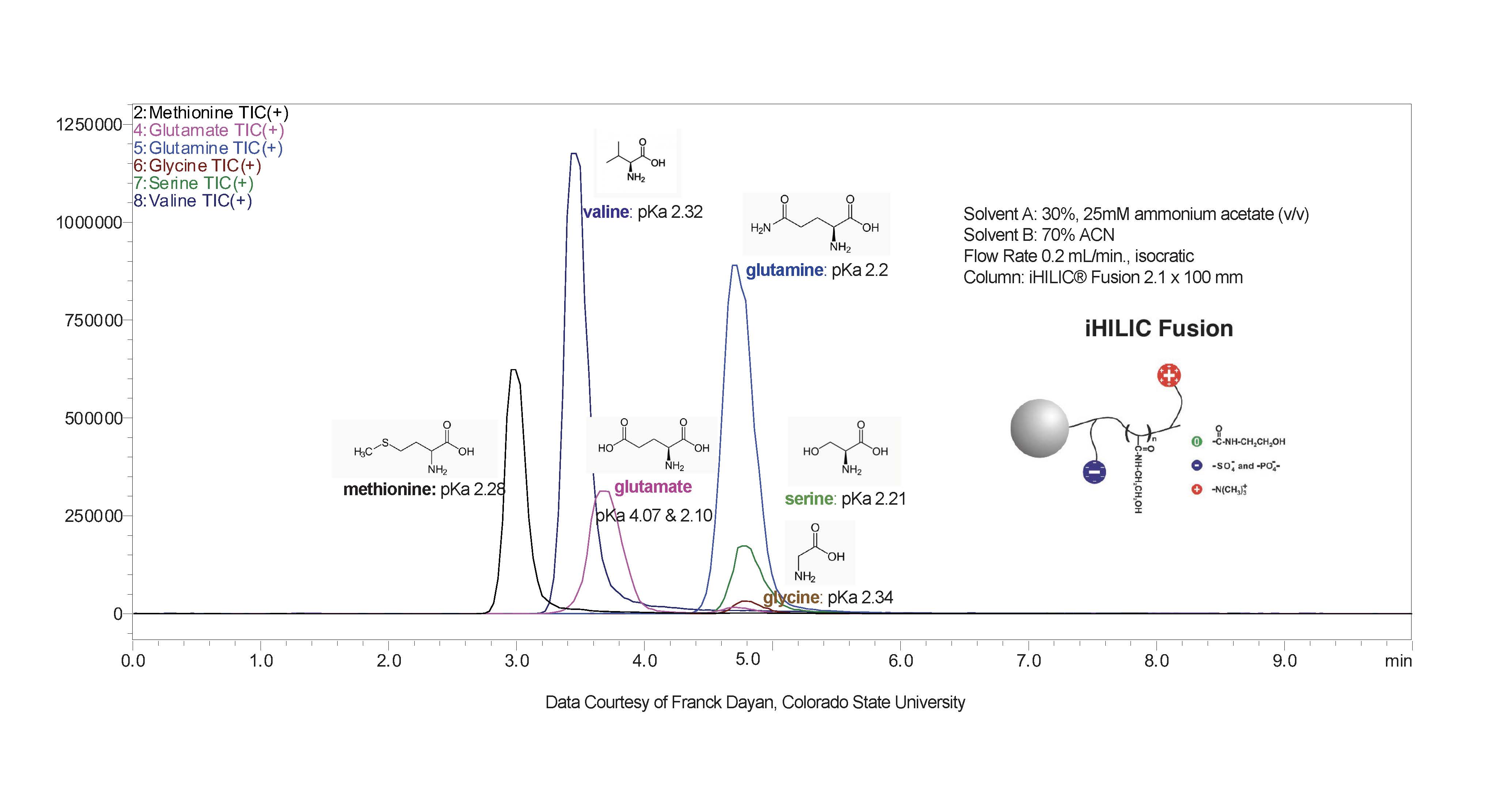
Amino Acids (underivatized) metabolomics
.jpg)
Dropbox of ERLIC Publications
- Dropbox of ERLIC Publications.
-
ERLIC-WAX, Tryptic Phosphopeptide Enrichment (ASMS poster)
ERLIC outperforms TiO2 - MOAC in quantitative phospho-proteomics with low sample amounts. Comparison of PolyWAX LP® to titanium dioxide
-
ERLIC-WAX SPE Phosphopeptide SPE Instructions
-
SDS Removal
-
ERLIC-MS Peptide Deamidation detection: P. Hao, et al. "Enhanced Separation and Characterization of Deamidated Peptides
with RP-ERLIC-Based Multidimensional Chromatography Coupled
with Tandem Mass Spectrometry", dx.doi.org/10.1021/pr201048c | J. Proteome Res. 2012, 11, 1804-1811.
Folic Acid Metabolites
Gentamycin (aminoglycoside) antibiotics with LC-MS Detection.
Glucosinolates
Glycopeptides
Glycopeptide Tryptic Mapping , LC-MS
Melamine analysis in food
Metabolomics Profiling
Metabolomics HILIC Comparison to RPC (Tolstikov paper).
Nucleoside Analysis with Volatile Buffers.
Nucleotide Analysis using Electrostatic Repulsion Hydrophilic Interaction (ERLIC) [alt. eHILIC].
Organic Acids pH Effects in HILIC application note
Organic Acids in foods
Phospholipid Class Separation on iHILIC® Fusion Columns with LC-MS detection
Phospholipid eHILIC assay with LC-MS or ELSD detection
Phospholipid removal using HILIC on silica SPE cartridges with acetone as eluent for eliminating matrix effects in the analysis of biological fluids when using RPC LC-MS.
Phosphorylation Variants of Histone H1.1 HILIC-CEX
Phosphopeptide Isolation using BioPureSPN™ Graphite SPE
Phosphopeptide Isolation using Electrostatic Repulsion Hydrophilic Interaction (ERLIC) [alt. e-HILIC].
Polar Molecules HILIC
Polar Molecules HILIC LC-MS/MS
Small Molecule (urea, allantoin, lysidone, amino adipic acid, pipicolic acid) applications
ERLIC vs. HILIC Column Comparisons
- Dropbox of ERLIC Publications.
General HILIC Information
Comparison of PolyHYDROXYETHYL A® to Amide-80®
for small molecule HILIC LC-MS analysis of fermentation broth.
ERLIC outperforms TiO2 - MOAC in quantitative phospho-proteomics with low sample amounts. Comparison of PolyWAX LP® to titanium dioxide
HILIC for small polar acids, nucleic acid bases and nucleosides. A Comparison (Y. Guo & S. Gaiki, J. Chromatogr. A, 1074 (2005) 71-80.) of Amide, Amine, Silica and betain sulfonate
functional groups.
HILIC, even on raw silica, Increases LC-MS Sensitivity.
LCGC article: " Hydrophilic Interaction Chromatography Using Silica Columns for the Retention of Polar Analytes
[small molecules sic] and Enhanced ESI-MS Sensitivity"
Pore Size Effects for Complex Carbohydrate Analyses
SPE HILIC
-
Nature Protocols, (2020) Glycomic Chacterization.
High Capacity HILIC micro-SPE
Operating Instructions for HILIC MiniSpin products.
UltraMicroTip columns (tips equivalent to the UltraMicroSpin columns for microliter sample prep).
PolyHYDROXYETHYL™ Aspartamide HILIC Technical Sheet
Go back to menu.
HILIC Articles (alt: "Aqueous Normal Phase" (ANP)) - HILIC Is Partition Chromatography with Electrostatic (e-HILIC) and Hydrogen Donor Mechanisms Utilized for Separations.
- Bibliography of PolyLC HILIC column references.
Dropbox of ERLIC Publications.
Complex Carbohydrate ZIC- HILIC References
Evaluation of an inverted zwitterionic, ZIC-cHILIC, cholinate stationary phase for proteomic 2-D identification of more than 20000 unique peptides corresponding to over 3500 proteins.
ZIC®-cHILIC for complementary selectivity
ZIC-cHILIC Brochure.
HILIC Newsletter-1108. Discusses melamine analysis in food products.
HILIC Newsletter-1208. Discusses methyl malonic acid analysis in serum, plasma and urine plus an ELSD detection method for choline and inositol.
HILIC Newsletter-0109. Discusses diethylene glycol analysis in medicine, and suggestions on how to reduce consumption of acetonitrile.
HILIC Newsletter-0309. Discusses alternatives to ACN for HILIC assays and announces the U.S. HILIC Day prior to the ASMS meeting in Philadelphia.
HILIC Newsletter-1009. Illustrates increased sensitivity for Peptide Mapping by HILIC and references Kato, et al., Underivatized Amino Acid Analysis publication: "Application of amino acid analysis using hydrophilic interaction liquid chromatography coupled with isotope dilution mass spectrometry for peptide and protein quantification."
HILIC Newsletter-0110. Approaches to the analysis of sugars and an invitation to register for HILIC Training webinars and podcasts.
HILIC Review Article: Petrus Hemstrom and Knut Irgum, J. Sep. Sci., 2006, 29, 1784 - 1821. "Hydrophilic Interaction Chromatography."
Hydrophilic interaction liquid chromatography with alcohol as a weak eluent, M. Liu, J. Ostovic, E.X. Chen, N. Cauchon, J. Chromatogr. A, Mar 2009; 1216(12): 2362-70.
ZIC-HILIC Publications Search
Go back to menu.
iHILIC® Fusion & iHILIC®-(P) Classic™
-
iHILIC® product list & capabilities.
iHILIC Publications:
- iHILIC® Column Publications
iSPE® HILIC SPE iSPE® Publications
LCGC Application Notes
Posters
Application Library by Chemical Type
- Metabolomics (amino acids). In press: M. Cuykx, et al., "Tailored LC–MS analysis improves the coverage of the intracellular metabolome of HepaRG cells," J. Chromatogr. A (2017). "[sic] iHILIC®Fusion chemistry is composed of different functional groups (amide, hydroxyl, sulphate, phosphate and bonded trimethylamine). The interactions were more complex, showing better selectivity than a bare silica column."
- iHILIC® Fusion Amino Acids (underivatized) from plant extracts
- iHILIC® Fusion(+) Amino Acids (underivatized) metabolomics
- iHILIC® Fusion(+) Direct Analysis of Amino Acids by HILIC–ESI-MS. (Alexander Schriewer ¹, Katharina Johanna Heilen¹, Heiko Hayen¹, and Wen Jiang², LCGC, THE APPLICATION NOTEBOOK – July 2017. ¹Institute of Inorganic and Analytical Chemistry, University of Münster, Münster, Germany, ²HILICON AB)
- iHILIC® Fusion(+) Artifical Sweetners
- iHILIC® Fusion(+) mono- & di-saccharides glucose, fructose, sucrose, maltose
- iHILIC® Fusion UDP_Glucose Publication: "Metabolic chemical reporters of glycans exhibit cell-type selective metabolism and glycoprotein labeling." Anna R. Bhatt, et al., ChemBioChem 10.1002/cbic.201700020
- iHILIC® Fusion: Effect of Buffer Strength When Separating cGAMP or Di- and Tri-phosphates
- pH & Buffer Strength Effects on ERLIC of Organic Acids
- iHILIC® Fusion Monitoring glutamine, glutamate, & glufosinate metabolomics
- iHILIC® Fusion Nucleotides & Nucleoside reverse transcriptase inhibitors (NRTI)
- iHILIC® Fusion Biometals Siderophores high-affinity iron-chelating compound separations
- iHILIC® Fusion Phospholipid Class Separations
Lipids SPE:
Cardiolipin iSPE® HILIC Isolation
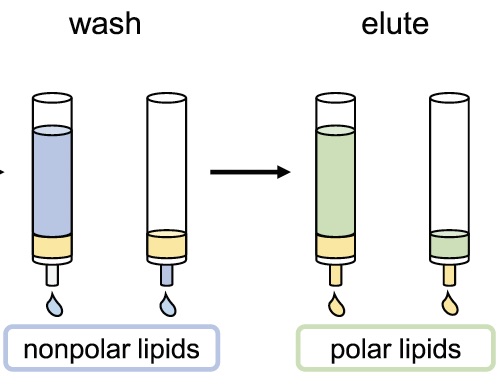
Publication outlines a HILIC-based clean‐up method enabling complete separation of polar lipids containing four fatty acyl residues from non-polar lipid classes using iSPE® HILIC columns.
iHILIC® Fusion(P)
-
- Metabolomics (ATP/ADP ratios, acetyl-CoA). "Breast Cancer-Derived Lung Metastases Show Increased Pyruvate
Carboxylase-Dependent Anaplerosis," Christen et al., 2016, Cell Reports 17, 837–848
October 11, 2016.
- Isocratic separation of Organic Acids: GHB, GABA, & succinic acid.
- Smoother ELSD baseline for Inorganic Ions. An alternative to ZIC pHILIC.
- High pH: Enhanced detection of phospho- cpds by MS
Glycan SPE:
iSPE® HILIC SPE iSPE® Publications
-
Glycopeptide Enrichment: iSPE® HILIC SPE shows favorable results: "Using this
technique, we observed multifold increases in the number and abundance of glycopeptides identified and more than 90% enrichment of glycopeptides over non-glycosylated peptides in
the cell membrane fraction. In addition, iSPE®-HILIC resolved glycosites previously unidentified using conventional zwitterionic ZIC®-HILIC." Diane Dayoung Park, et al., Chem. Sci., 2018, 9, 6271 "Membrane glycomics reveal heterogeneity and quantitative distribution of cell surface sialylation" DOI: 10.1039/c8sc01875h .
Isolation of O-Linked Glycans using iSPE® HILIC (Anal. Chem. 2020, 92, 3758−3768)
Nature Protocols, (2020) Glycomic Chacterization. Recommends iSPE® HILIC for (Steps 100–117) Glycoproteomic analysis: protein digestion, enrichment, and MS analysis.
iHILIC®-(P) Classic™
iHILIC®-(P) Classic™ product list and Operating Instructions.
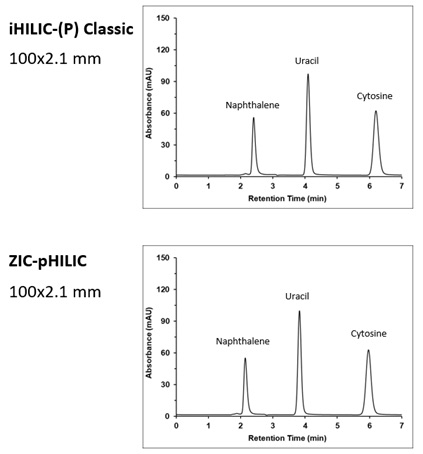
iHILIC®-(P) Classic, an in stock alternative to ZIC®-pHILIC. It is a charge modulated (i.e. zwitterionic) diol polymer based chemistry for high pH applications to reduce the effect of amines dominating selectivity. The iHILIC®-(P) Classic requires less buffer than the iHILIC® Fusion(P) chemistry and thus perfoms like the ZIC®-pHILIC: [SIC] Adenosine Phosphate Analysis (AMP, cAMP, dAMP, ADP, dATP and ATP). Using HILIC Conditions with Volatile Buffers (70% ACN, 30% Ammonium Carbonate, pH 8.8, 100 mM).
Go back to menu.
SeQuant® ZIC®-HILIC Columns
-
Applications for Zwitterion HILIC on a Silica Based Betain Sulfonate Surface
- "An HPLC Method for the Determination of Pharmaceutical Salts", LCGC AUG-06: Brian W. Pack and Donald S. Risley
Simultaneous Measurement of Anions & Cations: Method Validation
Poster on use of betain sulfonates bound to silica for Zwitterion HILIC separations
ZIC- HILIC Brochure for Polar Separations
Zwitterion HILIC of glucosinylates, an improved method
Zwitterion HILIC analysis of melamine in food
Zwitterion HILIC of morphine and glucuronated metabolites
Zwitterion HILIC of organophosphonate nerve agent metabolites
Zwitterion HILIC orthogonal method to RPC
Zwitterion HILIC of peptides prior to RPC. 2-D fractionation for proteomics.
Zwitterion HILIC of tryptic peptides
Zwitterion HILIC of homocysteine, methylmalonic acid and succinic acid from biological fluids
- ZIC-cHILIC, cholinate stationary phase for proteomic 2-D identification of more than 20000 unique peptides corresponding to over 3500 proteins.
-
Applications for Zwitterion pHILIC on a Polymer Based Betain Sulfonate Surface
- ZIC®-pHILIC for Adenosine Phosphate Analysis (AMP, cAMP, dAMP, ADP, dATP and ATP)
Using HILIC Conditions with Volatile Buffers (70% ACN, 30% Ammonium Carbonate, pH 8.8, 100 mM).
Adenosine Phosphate Analysis (AMP, ADP, ATP, CoA, Acetyl-CoA, and Pantothenate) Using HILIC Conditions with Volatile Buffers (80% ACN, 20% 10 mM Ammonium Carbonate, 0.2% NH4OH).
Retention Time Predictor Tool for ZIC-HILIC columns.
ZIC-HILIC Publications
- ZIC-HILIC Part Numbers and Prices
- ZIC®-HILIC & ZIC®-pHILIC General Operational Parameters Before Getting Started:
- ZIC®-HILIC Columns Technical Sheet
ZIC®-pHILIC Polymeric Columns Technical Sheet
ZIC®-HILIC Capillary Columns Technical Sheet
Complex Carbohydrate Separations
Activated Charcoal SPE
- Desalting and Purification of Oligosaccharides and Their Derivatives on BioPureSPN Graphite columns.
"The use of a porous graphitic carbon column for desalting hydrophilic peptides prior to matrix-assisted laser desorption/ionization time-of-flight mass spectrometry.", Chin, ET, Papac, DI, Anal Biochem. 1999 Sep 10;273(2):179-85.
C18 Desalting and Purification of Oligosaccharides
-
Fast Equilibrating BioPureSPN TARGA C18 SPE
aids recovery of O-Glycopeptides which are often acidic, hence polar, owing to the occurrence of acidic saccharides in the glycan or from acidic amino acids flanking their serine or threonine attachment sites.
Volume Limits for SPE
Glycan Reductive Isotope Labeling (GRIL)
-
Empty µ-Reactors™
with caps (Permethylation µ-Reactor, C-100500 (SUM 0000-BW), permit solid-phase permethylation and NaOH removal, all from an enclosed container for micro quantities of samples. See: Xia B., et al. Anal Biochem. 2009 Apr 15;387(2):162-70. Epub 2009 Feb 10. Glycan reductive isotope labeling (GRIL) for quantitative glycomics.
See also Permethylation µ-Reactor: Pilsoo Kang, Yehia Mechref, Iveta Klouckova, and Milos V. Novotny, Rapid Commun Mass Spectrom. 2005; 19(23): 3421–3428. doi: 10.1002/rcm.2210 Solid-phase permethylation of glycans for mass spectrometric analysis.
HILIC Electrostatic and Hydrogen Donor Mechanisms for Carbohydrate Separations.
-
- Isolation of O-Linked Glycans using iSPE® HILIC (Anal. Chem. 2020, 92, 3758−3768)
- Nature Protocols, (2020) Glycomic Chacterization. Recommends iSPE® HILIC for (Steps 100–117) Glycoproteomic analysis: protein digestion, enrichment, and MS analysis.
- Desalting and Purification of N-glycan Derivatives by HILIC SPE (Courtesy of New England BioLabs).
- Comparison of 100Å to 200Å Pores for the separation of monosaccharides and neutral oligosaccharides.
- Dramatic effect of a 200Å or greater Pore Size on the HILIC separation of derivatized sialylated complex glycans.
- ERLIC conditions for Sialylated or sulfated carbohydrates.
- iSPE® HILIC SPE Glycopeptide Enrichment shows favorable results: "Using this technique, we observed multifold increases in the number and abundance of glycopeptides identified and more than 90% enrichment of glycopeptides over non-glycosylated peptides in the cell membrane fraction. In addition, iSPE®-HILIC resolved glycosites previously unidentified using conventional zwitterionic ZIC®-HILIC." Diane Dayoung Park, et al., Chem. Sci., 2018, 9, 6271 "Membrane glycomics reveal heterogeneity and quantitative distribution of cell surface sialylation" DOI: 10.1039/c8sc01875h .
- IP-NPLC [eHILIC] for high mannose and sialylated glycopeptides. "Identification and Quantification of Glycoproteins Using Ion-Pairing Normal-Phase LC and MS," Wen Ding, Harald Nothaft, Christine M. Szymanski, and John Kelly, MCP Papers in Press, June 12, 2009.
- PolyGLYCOPLEX™, PolyWAX HipH™, & PolySAX™ HipH for Carbohydrate HPLC.
Glycomics and Proteomics Applications:
Amino Acid Specific Peptide & Protein Isolation Spin Columns
- BioMolecular Technologies®
Pi3 Methionine
Pi3 Tryptophan
Pi3 Tyrosine Phosphate
Pi3 Part Numbers and Prices
Glycomic Separation Techniques
-
Nature Protocols, (2020) Glycomic Chacterization. Recommends iSPE® HILIC for (Steps 100–117) Glycoproteomic analysis: protein digestion, enrichment, and MS analysis.
Activated Charcoal SPE: Desalting and Purification of Oligosaccharides and Their Derivatives.
"Simultaneous Identification of Unmodified Tryptic Peptides, Phosphopeptides, Glycopeptides, and Deamidated Peptides" (2011 ASMS, Siu Kwan Sze Poster, Nanyang Technological University, Singapore).
Effect of Pore Size On The HILIC Separation of Glycans
IP-NPLC [e-HILIC] for high mannose and sialylated glycopeptides. "Identification and Quantification of Glycoproteins Using Ion-Pairing Normal-Phase LC and MS," Wen Ding, Harald Nothaft, Christine M. Szymanski, and John Kelly, MCP Papers in Press, June 12, 2009.
Comparison of Hydrazide Covalent Chromatography and ERLIC for Glycopeptide Isolation.
Polyvalent, Unimolecular Glycopeptide Separation Using PROTO300 C4 RPC.
Fast Equilibrating BioPureSPN TARGA C18 SPE
aids recovery of O-Glycopeptides which are often acidic, hence polar, owing to the occurrence of acidic saccharides in the glycan or from acidic amino acids flanking their serine or threonine attachment sites.
HPLC & SPE Proteomic Separation Techniques
- Capillary Columns for LC-MS/MS Proteomics Fractionation.
- Comparison of SCX, TiO2, HILIC (HEA) and HILIC (WAX) for Phosphopeptide segregation and/or fractionation.
- Comparison of eHILIC Solvent Conditions Using PolyWAX LP™ (column or SPE) for "Simultaneous Identification of Unmodified Tryptic Peptides, Phosphopeptides, Glycopeptides, and Deamidated Peptides" (2011 ASMS, Siu Kwan Sze Poster, Nanyang Technological University, Singapore).
- Comprehensive Phosphopeptide Enrichment Strategy eHILIC (ERLIC) 2-D fractionation of peptides vs. SCX prior to RPC for proteomics ERLIC for shotgun proteomics: "[sic] comprehensive profiling of rat kidney proteome", P. Hao, et al., Journal of Proteome Research (impact factor: 5.11). 06/2010; 9(7):3520-6. DOI:10.1021/pr100037h.
- HILIC 2-D fractionation of peptides prior to RPC for proteomics.
- SCX pre-columns for post ICAT™ and MudPIT (DALPC) fractionation of proteins for proteomics.
- Use of pH and salt gradients for 2-D Nano-SCX/RPC-LC/MSMS proteomics fractionation of tryptic digests.
- - iSPE® HILIC SPE Glycopeptide Enrichment shows favorable results: "Using this technique, we observed multifold increases in the number and abundance of glycopeptides identified and more than 90% enrichment of glycopeptides over non-glycosylated peptides in the cell membrane fraction. In addition, iSPE®-HILIC resolved glycosites previously unidentified using conventional zwitterionic ZIC®-HILIC." Diane Dayoung Park, et al., Chem. Sci., 2018, 9, 6271 "Membrane glycomics reveal heterogeneity and quantitative distribution of cell surface sialylation" DOI: 10.1039/c8sc01875h .
- SPE BioPureSPN Spin columns and 96-Well Plates for microliter sample prep. For the hardware challenged: Use BioPureSPN HIL-SCX columns to fractionate, then load into an autosampler for RPC LC-MS/MS
- Micro filter Page*Eraser™ empty columns remove the particulates from in-gel digests to prolong capillary LC-MS column life
- Mixed-Bed Ion Exchange for Complete Protein Capture and Fractionation
DNA & RNA Oligonucleotide Separations:
Higgins Analytical®-
Nucleotide Analysis on Targa C18 5µm 250x4.6mm
column using 15mM ammonium acetate, pH 6.0 with a gradient to 10% MeOH.
Post Transcriptional Modification, Small RNA Nucleotide Separations (C. Callie Coombs, University of Cincinnati, Masters Thesis in Chemistry).
- DEAE MacroSpin column after PAGE or RPC column separation
- PolyHYDROXYETHYL Aspartamide™ for DeOxy RiboNucleoside Analysis
Using HILIC Conditions with Volatile Buffers.
- ERLIC separation using a PolySULFOETHYL™ A, SCX column and phosphate buffer conditions.
- ZIC®-pHILIC for Adenosine Phosphate Analysis (AMP, cAMP, dAMP, ADP, dATP and ATP)
Using HILIC Conditions with Volatile Buffers (70% ACN, 30% Ammonium Carbonate, pH 8.8, 100 mM).
Adenosine Phosphate Analysis (AMP, ADP, ATP, CoA, Acetyl-CoA, and Pantothenate) Using ERILIC Conditions with Volatile Buffers (80% ACN, 20% 10 mM Ammonium Carbonate, 0.2% NH4OH).
- Mono-, di- and tri-phosphate Nucleotides on iHILIC® Fusion ERLIC columns.
-
Most common TSK-GEL® SEC column and ToyoPearl® media questions
and answers.
Amide-80® Comparison to PolyHYDROXYETHYL A™ for small molecule HILIC LC-MS analysis of fermentation broth
Dialysis:
Simple Dialysis
-
Ultra-filtration, Dialysis, or 96 Well Plates for Salt Removal & Buffer Exchange
Reusable Teflon® DIALYZER™ for fast, small volume, salt removal (10µl to 5ml)
Micro DispoDIALYZER® for fast Small Volume (10µl to 100µl) salt removal. Disposable Dialysers at a fraction of the cost of slide or cassette products.
Micro Dispo-DIALYZER (1-100µL unit) Instructions.
96-Well DispoDIALYZER™ plates.
SpinCon™ Ultra-Micro DispoDIALYZER for ultra-small volume (1-5µL) ultra-filtration of samples.
SpinCon Operating Instructions.
Flow Through Macro DIALYZER for larger volume dialysis used in conjunction with the ElectroPREP™ system.
On-line, HPLC effluent buffer exchange & micro dialysis.
Removal of Excess Dye from Labelled Proteins in 20 minutes with Minimal Protein Loss.
Dialyzer Part Numbers & Prices
Equilibrium Dialysis:
-
Overview of Reusable dialyzers with replaceable membranes or disposable equilibrium dialysers for Protein or DNA Binding Studies.
Individual DispoEquilibrium DIALYZER™: 75µL disposable kits.
Modular Plate 96-Well DispoEquilibrium DIALYZER™ with individual membranes on 50-200 µL wells. ASME robotic dimensioned plates.
96-Well DispoEquilibrium DIALYZER 8 Plate Rotator picture.
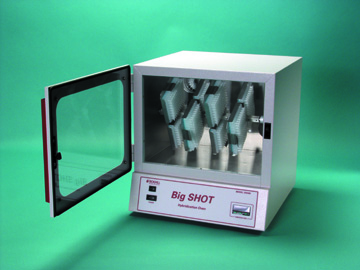
Reusable Fast Micro-Equilibrium DIALYZER™
Twenty-cell Multi-Equilibrium Dialyser
Equilibrium Dialysis Formulas and Protocols (Note: 5.7M file using Harvard Apparatus p/n, not Nest p/n)
Equilibrium Dialyzer Part Numbers & Prices
Membranes
- Dialysis Membrane Conditioning and storage
Dialysis Membrane MSDS data
Dialysis Membrane Overview
Dialysis Membrane Solvent Compatibility
Membrane Part Numbers & Prices
- Bibliography of Equilibrium Dialysis Applications
Equilibrium Dialysis Formulas and Protocols (Note: 5.7M file using Harvard Apparatus p/n, not Nest p/n)
Dialyzer and Equilibrium Dialyzer Prices
Electrophoresis Applications
Electro-Elution removes a 20-50x molar excess of fluorescent dyes from labelled proteins in 20 minutes
- ElectroPrep Gel Extractor, Protein Concentrator, Excess Dye or SDS Removal Device
- Fast ElectroPrep for 20 minute Removal of Excess Dye from Labelled Protein with Minimal Protein Loss.
Protein Gel Destaining
- Cozap Removes Coomassie Blue From Protein Gels. Crystal clear gels, no blue desk tops, and less expensive to use than tissues or foam. Zap those Coomassie Blues!
- Cozap Part Numbers & Prices